Honest about the limits
Some couples ask whether a Nikah can be performed without registration. This page explains what that means, what it does not achieve, and why we do not treat an unregistered Nikah as a complete solution.
We do not claim that an unregistered Nikah removes the legal duty to register, nor that it is a simpler route around the law. Registration is a statutory requirement in Pakistan, and avoiding it creates real risks.
What “Nikah without registration” means
“Nikah without registration” refers to a marriage that is religiously solemnised but not recorded with the competent authority through the prescribed Nikah Nama and Union Council process. The religious ceremony may have taken place; the official public record has not been created.
This is not a separate, simpler kind of marriage. It is the same marriage, missing the statutory step that creates the official record. See registration.
It does not remove the legal duty to register
In Pakistan, registration of marriage with the Union Council under the Muslim Family Laws Ordinance, 1961 is a statutory requirement, and non-registration is an offence. A religiously solemnised Nikah does not erase that duty.
An unregistered Nikah is not a lawful shortcut. Treating it as one can expose both spouses to legal, evidentiary and practical difficulties, including difficulties proving the marriage for official purposes.
Risks of an unregistered Nikah
Without registration, there is no official public record of the marriage. This can create serious problems for proving the marriage, for rights that depend on it, for a NADRA certificate, and for overseas use.
An unregistered Nikah can also complicate matters involving children, inheritance and future official transactions. The risks often surface long after the ceremony, when they are hardest to fix.
- No official public record of the marriage.
- Difficulty obtaining a NADRA certificate or other official evidence.
- Problems proving the marriage for immigration or civil use abroad.
- Complications for rights that depend on a registered marriage.
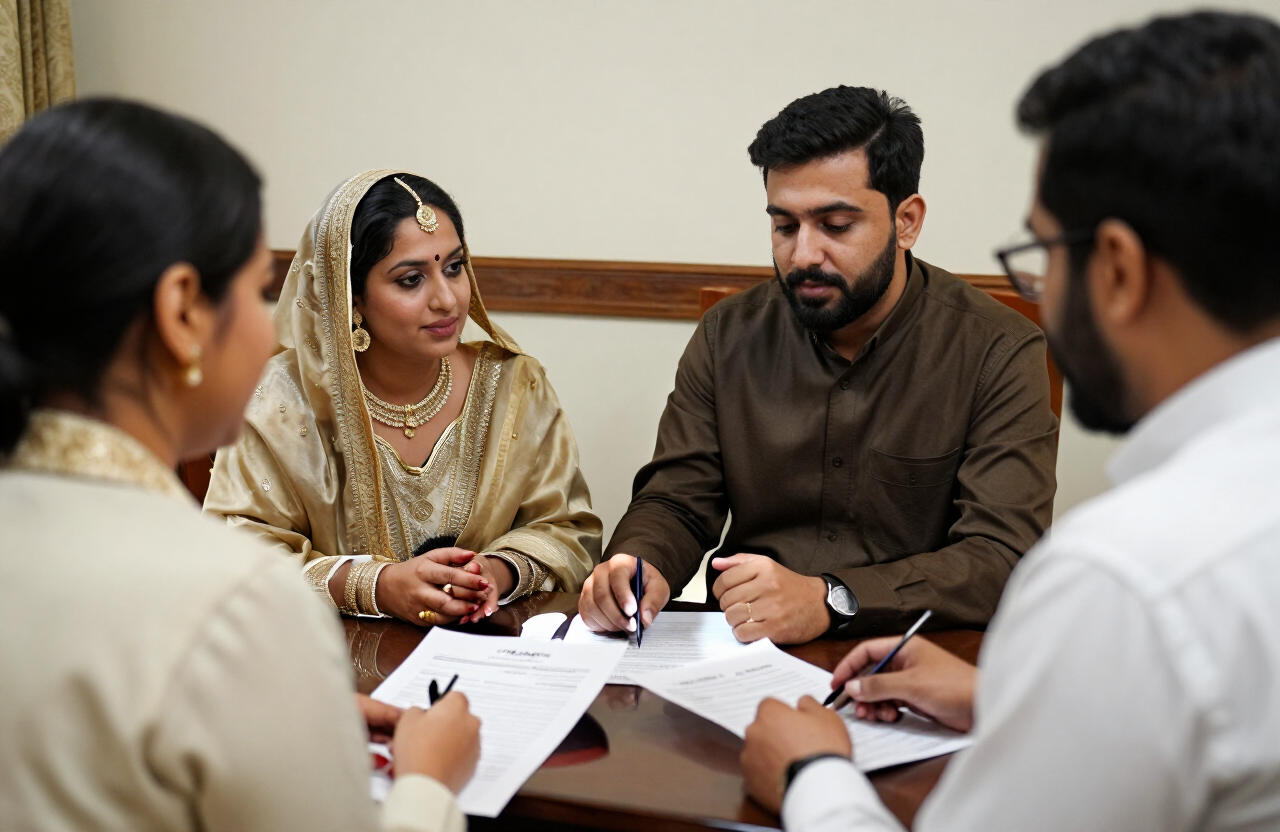
Religious validity and legal registration are separate
A Nikah may be religiously valid and still need statutory registration. The two are distinct: religious solemnisation concerns the Islamic contract; registration concerns the official record under Pakistani law.
Conflating them is a common mistake. A Sharia Nikah does not replace registration, and registration does not diminish the religious significance of the ceremony.
What to do if your Nikah is unregistered
If your Nikah was solemnised but not registered, the appropriate step is to pursue registration through the competent authority, not to treat the gap as a benefit. We help clarify the route and the supporting records needed.
Where the delay is long or the documents are inconsistent, the authority’s process and evidence requirements will apply. Raise the situation honestly so the correct route can be identified.
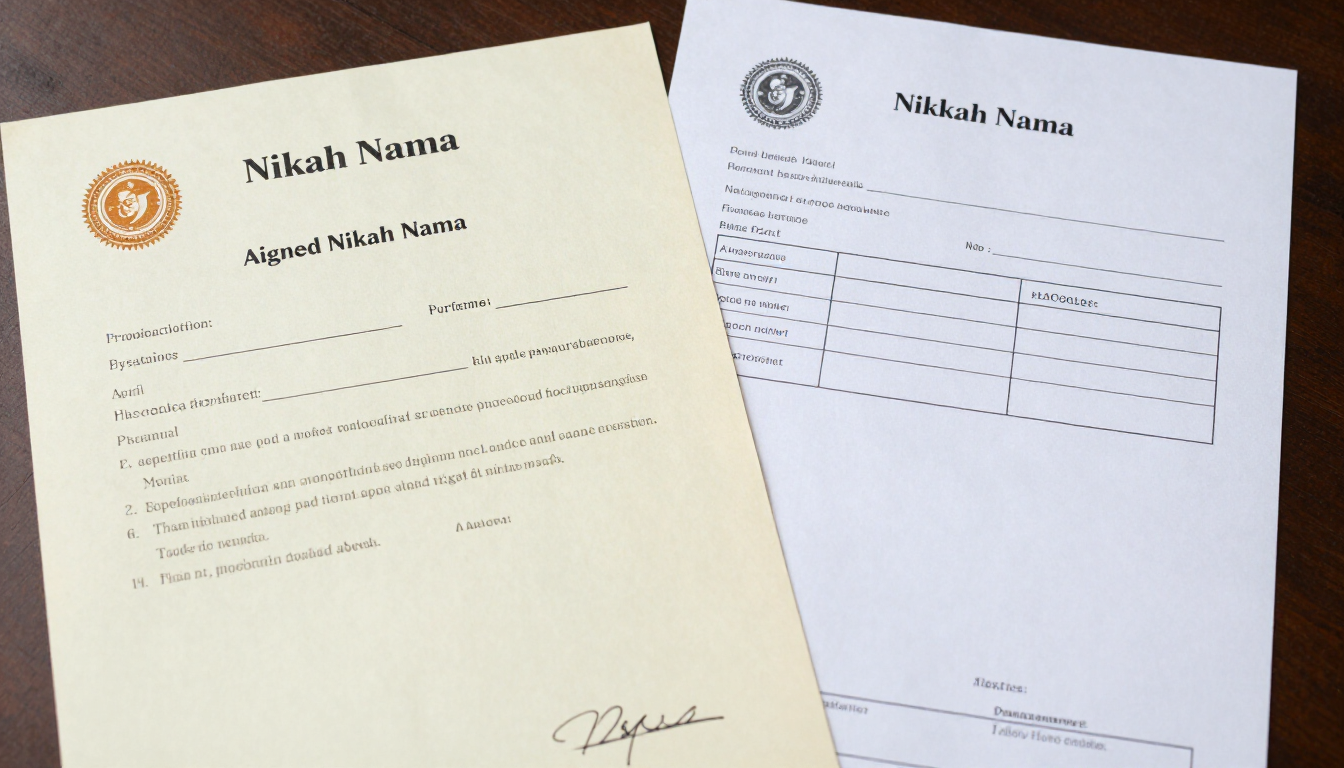
Why we coordinate registered Nikahs
We coordinate marriages that are both religiously solemnised and properly registered, because that is what protects both spouses. An unregistered Nikah is not a service we promote as a complete solution.
If you are being offered a Nikah with no registration and no caveats, treat it as a warning sign. See the procedure for how a complete, registered process works.