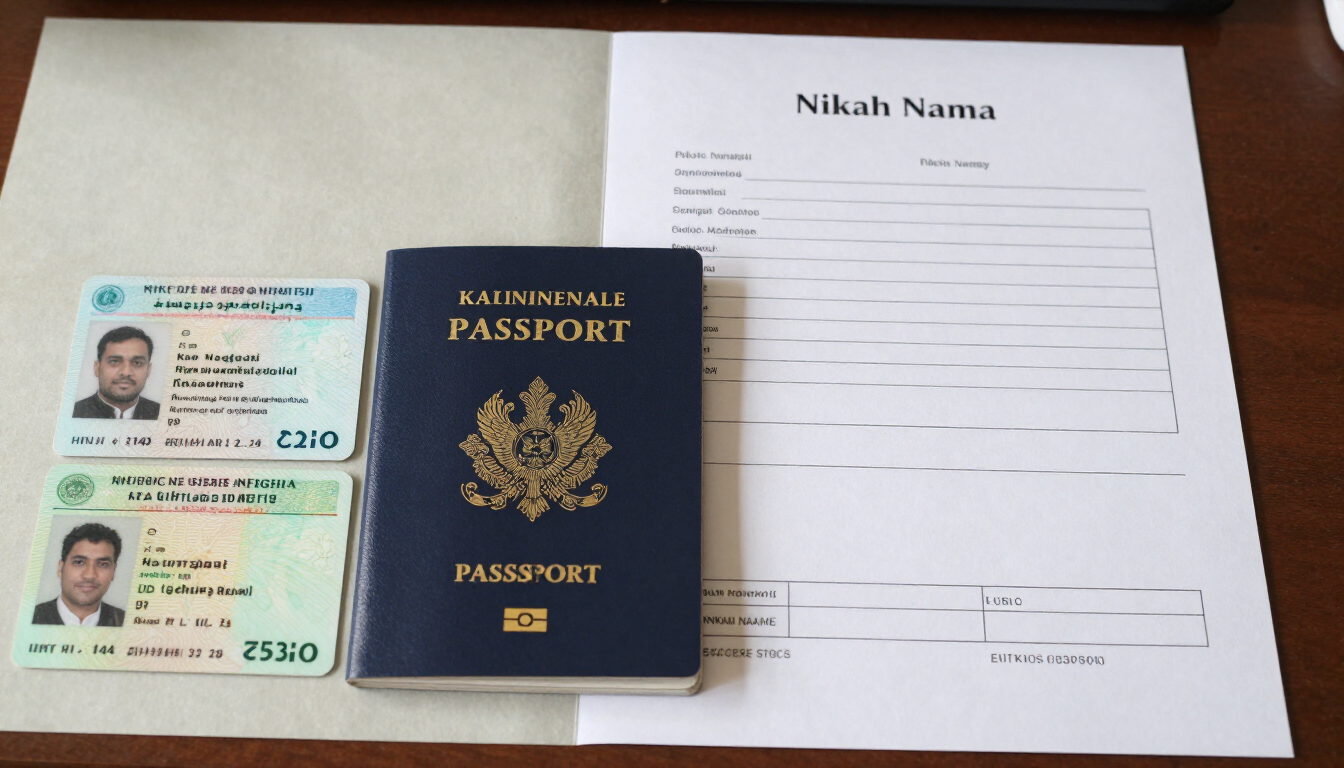
Requirements checked first, not assumed
A valid and registrable marriage begins with confirmed eligibility. This page sets out the requirements we review before any date is set — consent, capacity, witnesses and identity — and the cases that need professional advice.
We do not coordinate underage, coerced or misrepresented marriages. Where a requirement is uncertain, we raise it before proceeding rather than pressing ahead.
Free and informed consent
Both prospective spouses must freely and knowingly consent to the marriage. Consent is the foundation of a valid Nikah; it cannot be presumed, pressured or manufactured. Both people should understand the contract, the agreed mehr and any proposed terms.
If either person has any concern about consent or capacity, it must be raised before the arrangement is confirmed. A ceremony conducted without genuine consent is not a marriage we will coordinate.
Legal capacity and minimum age
Both spouses need the legal capacity to marry. The applicable minimum-age rules must be checked for the relevant jurisdiction; do not rely on an assumed universal threshold. A prior undissolved marriage can create a bar that needs professional review.
Capacity and age are legal questions. Where there is any doubt, seek advice from a professional qualified for the relevant jurisdiction before arranging anything.
Witnesses and the role of a wali
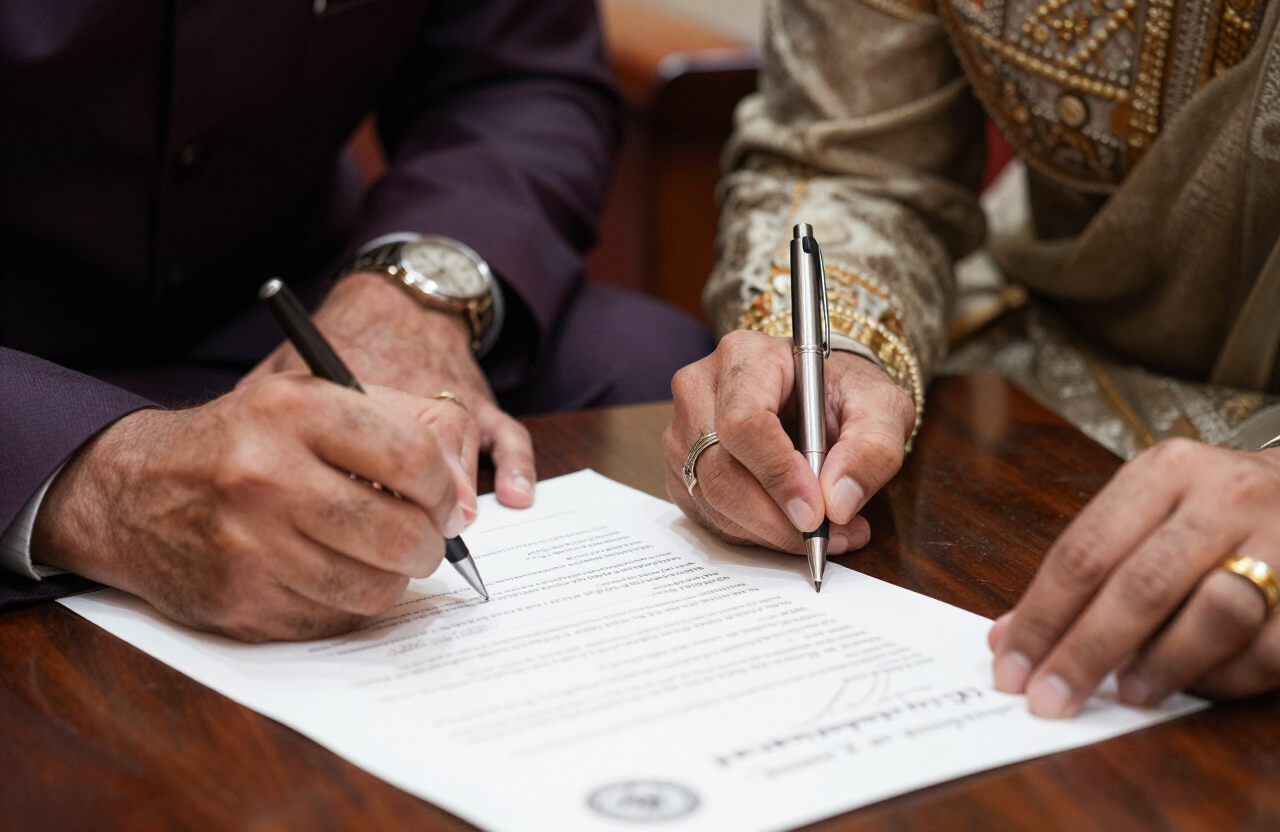
Witnesses are central to the Islamic marriage contract. They must be present and identifiable, and their details are recorded in the Nikah Nama. The role of a wali (guardian) applies where the relevant school of thought or local rule requires it.
If a representative is proposed to act for a spouse, the authorisation, identity and participation route must be assessed for the specific case. A video image alone is not proof that witness and consent requirements were met.
- Two competent witnesses, present and identifiable.
- A wali where the relevant rule requires one.
- Any representative acting under a valid authorisation.
- Witness details recorded consistently in the Nikah Nama.
Identity records
Identity records — such as a CNIC, passport or other official identification — are checked against the Nikah Nama entries. Names, dates of birth and identity references should be consistent, including English transliteration where relevant.
A discrepancy between identity records and marriage entries should be corrected at source before submission. See documents for the full checklist.
Prior marriages and authorisation
A prior marriage requires additional review. You may need a final divorce record, evidence of its effective status, or a death certificate, together with any other applicable requirements. Disclose every prior marriage at the first consultation.
Where one spouse is abroad and a representative is proposed, the authorisation must be valid and accepted for the intended arrangement. Do not assume a remote arrangement meets every destination’s rules — see overseas guidance.
Requirements that depend on an authority
Some requirements are confirmed by an authority, not by a coordinator: the acceptance of a registration submission, the issue of a NADRA certificate, and any overseas recognition. We prepare and guide, but the authority decides.
Confirm current requirements for your jurisdiction before relying on any arrangement. Rules can change and may differ between locations.