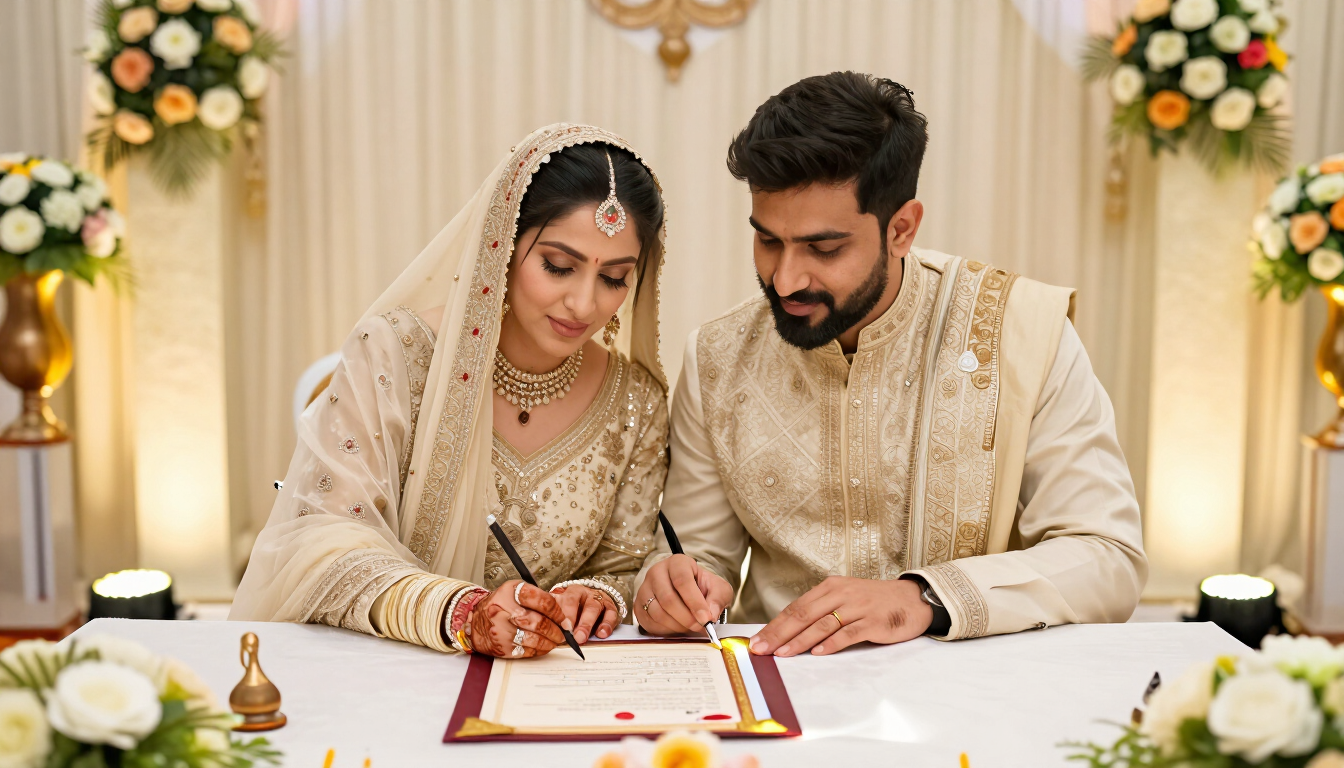
A Karachi Nikah, handled with care
Online Nikah Legal Service coordinates Muslim marriage enquiries connected to Karachi from two verified consultation locations — Gulistan-e-Johar and DHA, Phase 7. We begin with the substance: free consent, identity, witnesses, the Nikah Nama and statutory registration with the competent Sindh authority. The “online” part is a convenience for the first conversation, not a shortcut around the requirements that make a marriage valid and registrable.
Karachi is Pakistan’s largest city and spans many Union Council jurisdictions. The office you visit for consultation is not necessarily the authority that records your marriage. We help you identify the correct registration route for your circumstances before any date is set. No instant ceremony, guaranteed visa or worldwide recognition is promised on this page.
What “Online Nikah in Karachi” means in practice
“Online Nikah” is a shorthand for starting the consultation, document review and coordination remotely — not a separate legal category of marriage. The Nikah itself is the same Islamic and statutory event whether planning begins over a video call or in person at our Karachi office. What changes is convenience, not the requirements.
A responsible service treats the remote conversation as the first step. It does not remove identity checks, free consent, the presence of witnesses, the role of a wali where applicable, or registration with the Union Council. See our step-by-step procedure for how these stages fit together.
Karachi localities we coordinate enquiries for
Couples connected to Karachi approach us from across the city. Our consultation locations are in Gulistan-e-Johar and DHA; we do not operate a branch office in every locality listed below, but we can coordinate enquiries and help identify the relevant Union Council for marriages connected to these areas.
If your residence, family or intended registration office falls in one of these localities, tell us at the first consultation so the correct jurisdiction and any travel or handling considerations can be reviewed.
- DHA Karachi Phases 1–8 and DHA Phase 7 (consultation by arrangement)
- Clifton and Block 2 Clifton
- Gulistan-e-Johar (Blocks 1–19, consultation by arrangement)
- Gulshan-e-Iqbal (Blocks 1–13)
- PECHS (Pakistan Employees Cooperative Housing Society)
- Bahadurabad and North Nazimabad
- Federal B Area Blocks 1–21
- Nazimabad (Blocks A–N)
- North Karachi and Surjani Town
- Korangi and Korangi Creek
- Malir, Malir Cantt and Model Colony
- Bahria Town Karachi
Verified Karachi consultation offices
We maintain two consultation locations in Karachi. Please contact the team before visiting so that a suitable time and the correct location can be agreed — no appointment is confirmed by submitting an enquiry form.
Both offices are consultation points for document review and planning. The Union Council that records your marriage depends on the facts of the case, not on which office you visit.
Gulistan-e-Johar office
A-220, 2nd Floor, Supreme Corner, Johar Chowrangi, Block 18, Gulistan-e-Johar, Karachi. This is our primary consultation location for couples in the central and eastern parts of the city.
DHA, Karachi office
Jami Commercial, Phase 7, DHA, Karachi. This location serves couples in DHA, Clifton and southern Karachi. Arrange your visit in advance.
Eligibility, consent and legal capacity
Both prospective spouses must freely and knowingly consent. Free consent is the foundation of a valid Nikah, not a formality. Legal capacity — including the applicable minimum age and the absence of a bar from a prior undissolved marriage — must be confirmed for the relevant jurisdiction. We do not coordinate underage, coerced or misrepresented marriages.
In Sindh, the Sindh Child Marriage Restraint Act, 2013 sets the minimum age for marriage at 18 for both the bride and the groom, and makes contracting, facilitating or solemnising a child marriage a punishable offence. This is distinct from the older Child Marriage Restraint Act, 1929 that continues to apply in other provinces, so the applicable age rule depends on where the marriage is connected to — do not assume a single nationwide threshold. Where there is any doubt about age or capacity, seek advice from a professional qualified for the relevant jurisdiction before proceeding.
A prior marriage, divorce or bereavement may raise additional requirements that need professional review. Disclose the facts accurately at the first consultation so the correct evidence can be assessed before any arrangement is confirmed.
Identity documents to prepare
Begin with a short summary of your situation rather than full identity documents. After the initial review, send only the records needed for the agreed task. The exact list depends on your circumstances, but the following are commonly relevant for a Karachi-connected marriage.
- CNIC (Computerised National Identity Card) for each spouse and witness
- NICOP or passport where one spouse is an overseas Pakistani
- Final divorce decree or death certificate where there was a prior marriage
- Witness details — usually two male witnesses with valid identity records
- Any authorisation document where a representative is proposed
The Nikah procedure and witnesses
In Islam, marriage is a contract formed by a clear offer (ijab) and acceptance (qabul) between two eligible people, in the presence of witnesses. The contract ordinarily includes an agreed mehr — a financial right of the wife — and may include other agreed terms. A Nikah registrar (Nikah Khawan) licensed by the Union Council ordinarily performs and records the marriage in Karachi.
Witnesses are central to the Islamic contract, and the role of a wali (guardian) applies where the relevant school of thought or local rule requires it. The identity and presence of witnesses must be genuine and verifiable. A video image alone is not, by itself, proof that these requirements were met. Where a representative is proposed for an overseas spouse, the authorisation and its acceptance must be reviewed in advance.
Registration with the Union Council in Karachi
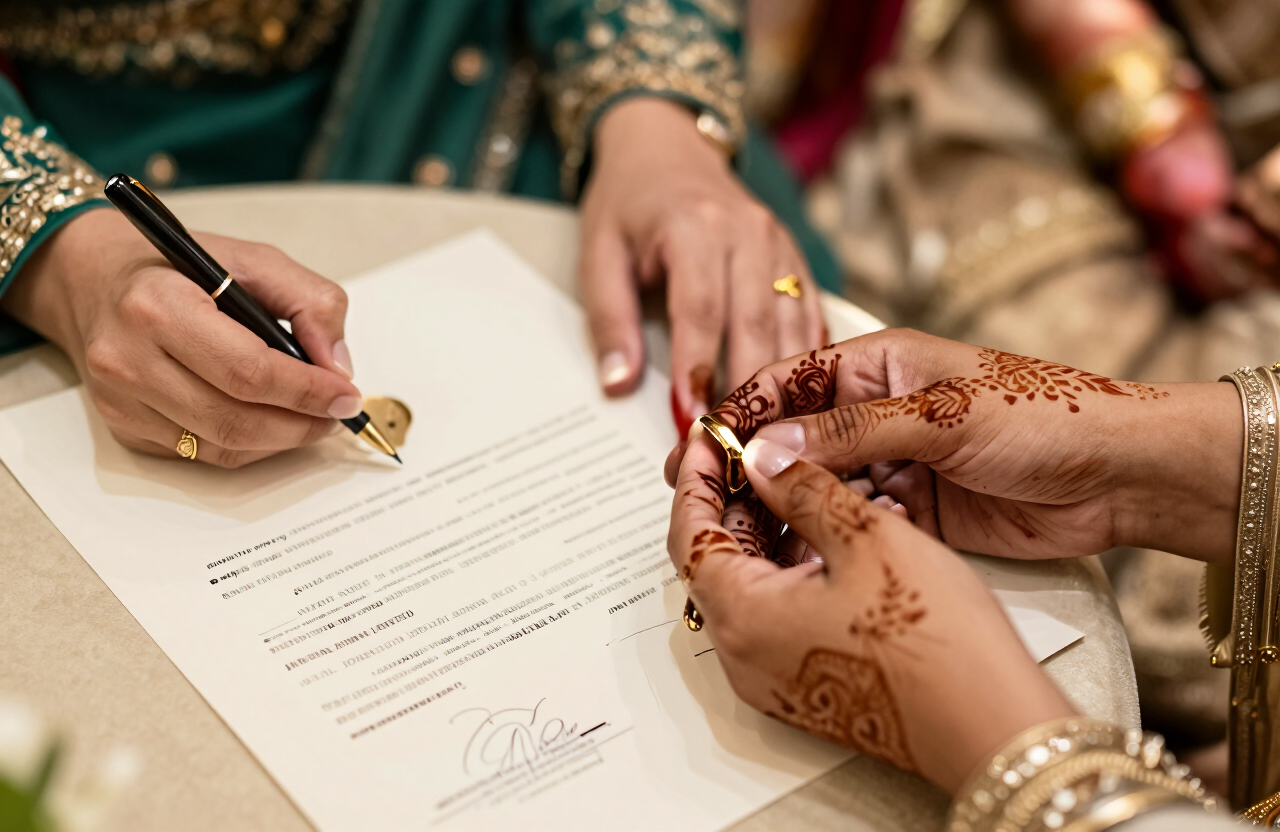
In Pakistan, registration of the marriage with the Union Council under the Muslim Family Laws Ordinance, 1961 is a statutory step. Section 5 of the Ordinance requires that every marriage solemnised under Muslim law be reported to the Union Council and registered, with the Nikah Nama as the prescribed form through which it is recorded. Section 6 makes failure to comply with the registration requirements — by whoever is responsible — an offence punishable under the Ordinance. A licensed Nikah registrar (Nikah Khawan) ordinarily performs and records the marriage in Karachi.
Karachi is divided across many Union Councils; the correct one depends on where the spouses reside and where the marriage is solemnised, not on personal preference. Statutory registration creates an official public record of the marriage. It is distinct from the religious solemnisation itself, and distinct again from a NADRA computerized marriage certificate, which is typically issued on the basis of the Union Council record. Skipping registration does not erase the legal duty to register, and non-registration can carry consequences under the Ordinance.
If your documents will be used overseas
Many Karachi enquiries come from overseas Pakistanis or spouses living abroad. Tell us the destination and intended use from the outset. Pakistani registration, document authentication and overseas acceptance are distinct matters — translation, attestation or legalisation may authenticate a document but does not guarantee recognition or a visa outcome.
Different countries treat remote or proxy marriages differently. Seek current advice from the receiving institution or a qualified destination-country adviser. No overseas recognition, visa approval or legal outcome is guaranteed by a Pakistan-side coordination service.
How to inquire and what happens next
Start with a confidential consultation using the form below, or message us on WhatsApp at +92 331 6644789. Share where both prospective spouses live, their nationality, marital history and the intended use of the documents. We review the case before confirming what can be coordinated.
Our usual Nikah coordination and registration-assistance fee is PKR 40,000–60,000 depending on the agreed scope, with 50% in advance and 50% after completion of the agreed services. Authority charges, translation, attestation, courier and travel are disclosed separately. See fees and procedure for the full breakdown.