Remote start, honest limits
For overseas Pakistanis, the initial discussion and document review can begin remotely. This page explains what that makes easier, and the destination-specific questions that decide whether the arrangement will be accepted abroad.
We do not guarantee overseas recognition, a visa outcome, or that a remote or proxy arrangement meets every country’s rules. Obtain destination-specific advice before paying for a route intended for overseas use.
Start with your locations and intended use
Tell us where both prospective spouses live, their nationality, marital history and the reason the documents are needed. Time-zone planning is useful, but it comes after understanding the substantive requirements.
Remote consultation lets the initial discussion and requirements review begin before travel. If a representative is proposed, the validity and acceptance of the authorisation must be assessed for the specific arrangement.
Remote participation and representatives
Where one party cannot be physically present, Islamic law and Pakistani practice may allow a representative (wakil) to act on the basis of a valid authorisation. The authorisation, identity and participation route must be assessed for the case before any ceremony is arranged.
A video call alone is not, by itself, a legally sufficient ceremony. Do not assume that an arrangement permitted or recorded in Pakistan is recognised everywhere — immigration and civil-registration authorities abroad can treat remote or proxy marriages differently.
Coordinate the Pakistan-side documentation
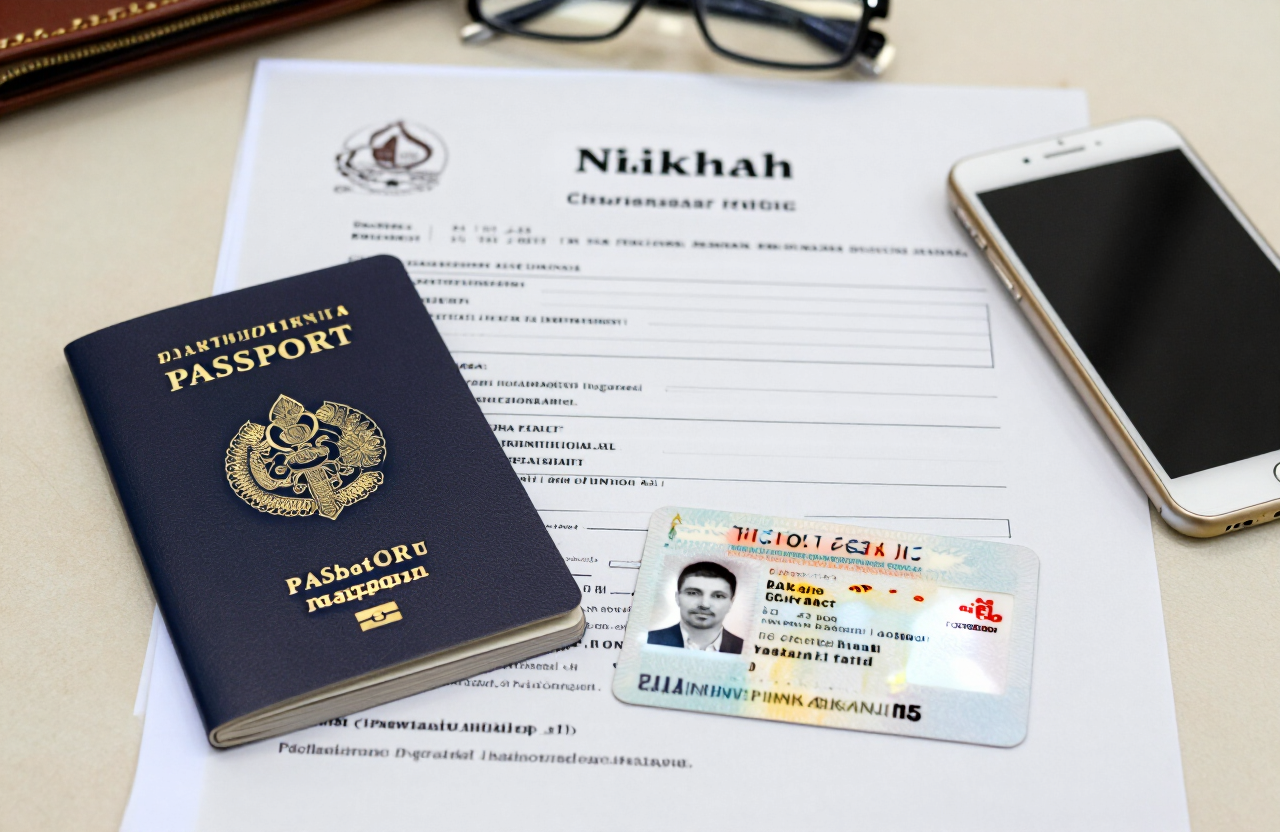
We discuss the Nikah Nama, local registration route and any civil records included in the engagement. Where overseas authorisation, attestation or translation is required, confirm the correct issuing and receiving authorities before spending money.
Courier charges, overseas authentication and third-party handling are disclosed separately where applicable. Retain your originals unless a justified submission requirement has been explained. See documents.
Attestation, translation and legalisation
For overseas use, the receiving authority may ask for attestation, an approved translation, or legalisation. Requirements can vary by country, by emirate or region, and by the intended use. Establish the exact route with the relevant authority before commissioning work.
Translation must reflect the actual entries and is not an opportunity to revise the contract. Attestation authenticates a document; it does not guarantee recognition of the underlying marriage or a visa outcome.
Seek destination-specific advice early
Recognition and immigration eligibility differ between countries. Some applications have additional restrictions on remote or proxy marriages, even if a marriage is recorded in Pakistan. Explain exactly how the ceremony will be conducted to a qualified adviser in the destination country.
No Pakistan-side provider can guarantee the decision of an overseas authority. For country-specific detail, see our international destination pages.

What overseas coordination does not promise
A remote start does not mean a guaranteed result. Overseas recognition, visa approval, a fixed processing time and acceptance of remote arrangements are all decided by the receiving authority, not by a coordinator.
If a provider promises a universally recognised online marriage with no caveats, treat it as a warning sign. A responsible process names the destination-specific uncertainties first.