Online Nikah in Pakistan & Worldwide+92 302 6644789
ONLINE NIKAH IN PAKISTAN

Online Nikah in Pakistan

A clear, accurate guide to how Nikah is solemnised, documented and registered in Pakistan — and what “online” can and cannot do.

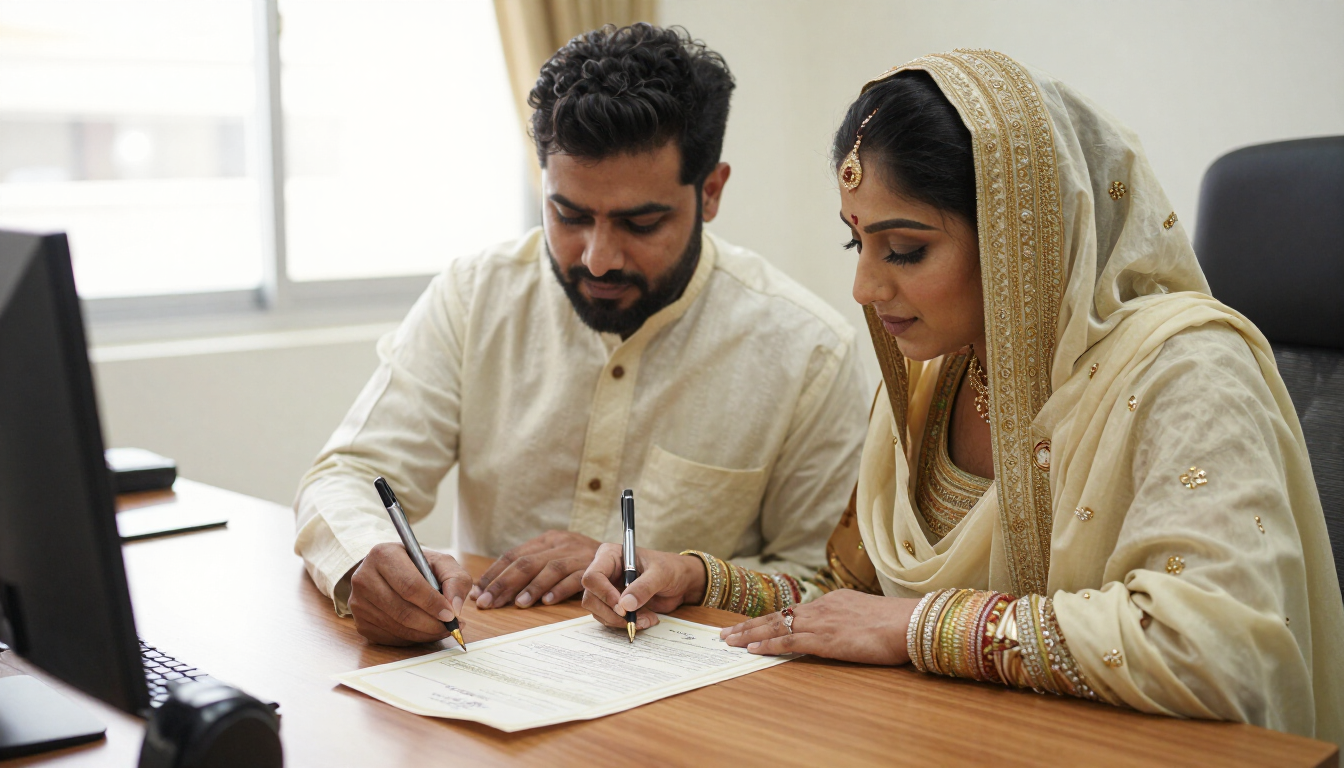
A Pakistani couple in traditional wedding attire signing their Nikah Nama marriage document at a desk
OUR APPROACH

Guidance grounded in the law, not shortcuts

Online Nikah Legal Service provides coordination and guidance around Muslim marriage in Pakistan. This page explains the substance — Islamic solemnisation, consent, witnesses, the Nikah Nama and statutory registration — so you can tell a responsible process from a hollow one. We do not promise instant ceremonies, guaranteed visas or worldwide recognition.

Where a question turns on your individual circumstances — age, capacity, a prior marriage, authorisation or acceptance abroad — seek advice from a professional qualified for the relevant jurisdiction. The information here is general and may change; confirm current requirements before you rely on it.

01

What “Online Nikah” actually means

“Online Nikah” is a shorthand, not a separate legal category. The marriage itself is the same Islamic and statutory event whether the planning begins over a video call or in person. What changes is how the consultation, document review and coordination start — not the requirements that make a marriage valid and registrable in Pakistan.

A responsible service treats the “online” part as a convenience for the initial discussion and document review. It does not remove identity checks, free consent, the presence of witnesses, the role of a wali where applicable, or registration with the competent authority. See our step-by-step procedure for how these stages fit together.

02

Islamic solemnisation: the marriage contract

In Islam, marriage is a contract (nikah) formed by a clear offer (ijab) and acceptance (qabul) between two people who are eligible to marry, in the presence of witnesses. The contract ordinarily includes an agreed mehr — a financial right of the wife — and may include other agreed terms. Solemnisation is the act through which this contract comes into being.

A religiously valid Nikah is not the same as a marriage that is fully documented or registered. A ceremony may be religiously solemnised and still need the Nikah Nama to be completed and statutory registration to follow. Treating the ceremony as the only step is a common and costly mistake.
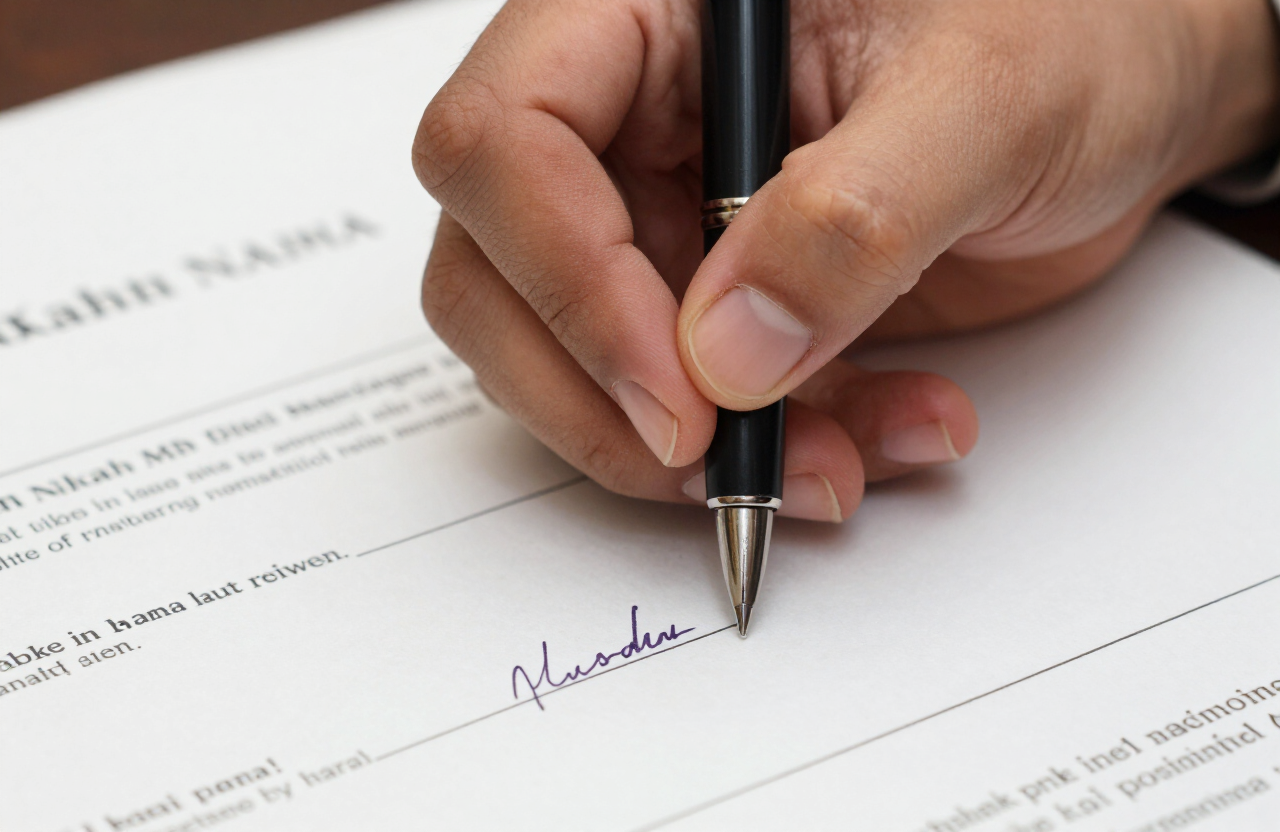
Close-up of a hand signing the Nikah Nama marriage contract with a fountain pen
Signing the Nikah Nama — the contract document that records the parties, mehr and witnesses.
03

Free consent, capacity and the role of witnesses

Both prospective spouses must freely and knowingly consent. Free consent is not a formality; it is the foundation of a valid marriage. Legal capacity — including the applicable minimum age and the absence of a bar from a prior undissolved marriage — must be confirmed for the relevant jurisdiction. The minimum age is not uniform across Pakistan: in Sindh the Sindh Child Marriage Restraint Act, 2013 sets it at 18 for both parties, while other provinces apply the older Child Marriage Restraint Act, 1929. We do not coordinate underage, coerced or misrepresented marriages.

Witnesses are central to the Islamic contract, and the role of a wali (guardian) applies where the relevant school of thought or local rule requires it. The identity and presence of witnesses, and any authorisation given to a representative, must be genuine and verifiable. A video image alone is not, by itself, proof that these requirements were met.

  • Confirm both spouses freely consent and understand the contract.
  • Check the applicable minimum-age and capacity rules for your jurisdiction.
  • Ensure witnesses are present and identifiable.
  • Review the role of a wali or representative for your circumstances.
04

The Nikah Nama and statutory registration

The Nikah Nama is the prescribed marriage-contract document that records the parties, mehr, witnesses and other particulars. In Pakistan, registration of the marriage with the Union Council is a statutory step under the Muslim Family Laws Ordinance, 1961: Section 5 requires every marriage solemnised under Muslim law to be reported to and registered with the Union Council, and Section 6 makes failure to comply with the registration requirements an offence. The Nikah Nama is the form through which it is recorded, and a Nikah registrar (Nikah Khawan) licensed by the Union Council ordinarily performs and records the marriage.

Statutory registration creates an official public record of the marriage. It is distinct from the religious solemnisation itself, and distinct again from a NADRA computerized marriage certificate, which is typically issued on the basis of the Union Council record. Skipping registration does not erase the legal duty to register, and non-registration can carry consequences under the Ordinance.

05

Can a Nikah be solemnised remotely or by video call?

Remote consultation can begin the process, but a video call is not, by itself, a legally sufficient ceremony. Where one party cannot be physically present, Islamic law and Pakistani practice may allow a representative (wakil) to act on the basis of a valid authorisation. The authorisation, identity and participation route must be assessed for the specific case before any ceremony is arranged.

Do not assume that an arrangement permitted or recorded in Pakistan is recognised everywhere. Immigration and civil-registration authorities in other countries can treat remote or proxy marriages differently, and some applications impose additional restrictions. Obtain destination-specific advice before paying for a route intended for overseas use — see overseas Pakistani guidance.
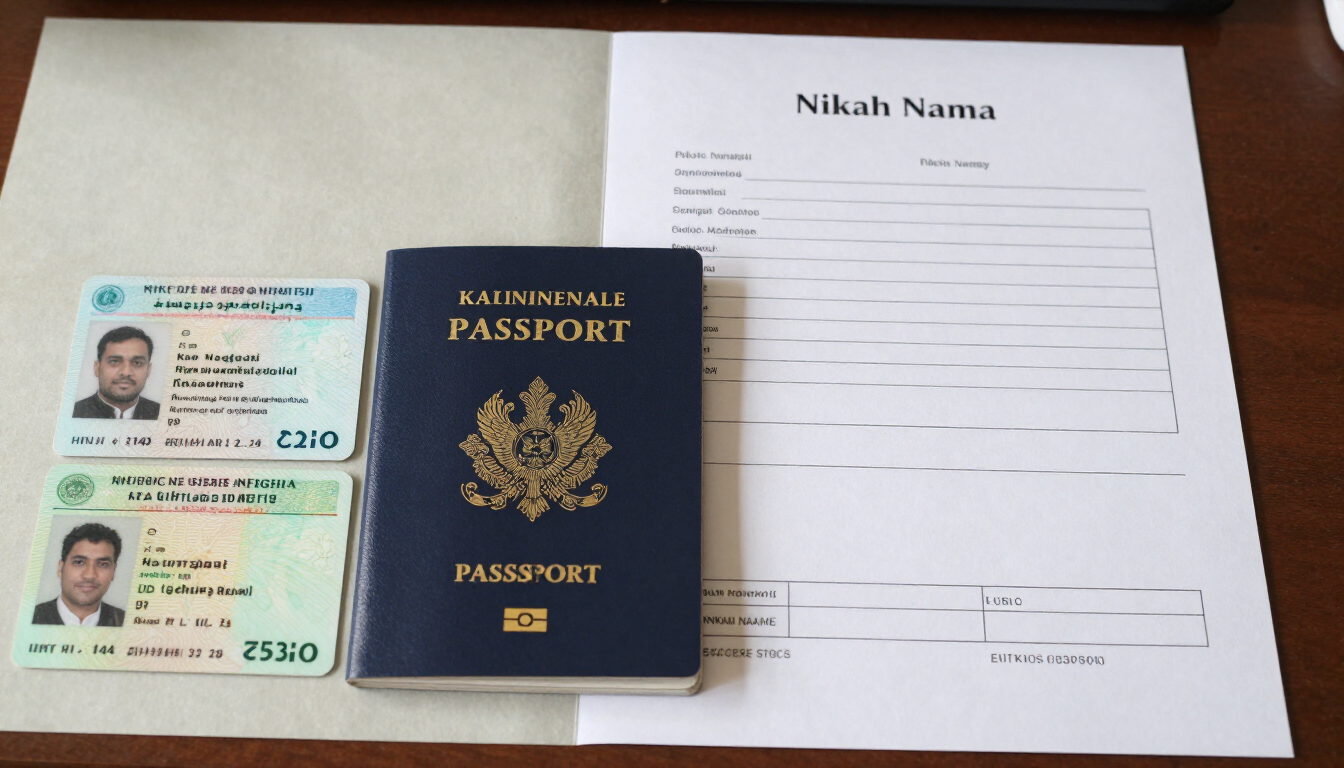
Pakistani identity documents including a CNIC and passport beside a Nikah Nama form
Identity records are checked against the Nikah Nama entries before registration.
06

NADRA marriage certificates and official records

A NADRA computerized marriage certificate is a machine-readable official record typically generated from the Union Council registration. It is often requested for visa, immigration and other official purposes. It does not replace the Nikah Nama; the two serve related but different functions, and the underlying registration must exist first.

If names, identity references or dates are inconsistent between the Nikah Nama, the Union Council record and the NADRA certificate, corrections must follow the issuing authority’s process and can take additional time. Check particulars early, not after a visa refusal.

Nikah Nama, Union Council registration and NADRA certificate compared
DocumentWhat it isWho issues itPurpose
Nikah NamaThe Muslim marriage-contract formLicensed Nikah registrarRecords parties, mehr and witnesses
Union Council registrationThe statutory public recordUnion CouncilCreates the official marriage record
NADRA certificateA computerized official certificateNADRA (from Union Council record)Used for visas and official purposes
07

Overseas use and recognition

The receiving authority abroad decides whether it accepts a Pakistani marriage and its evidence. Translation, attestation and legalisation may make a document usable, but they do not guarantee recognition or a visa outcome. Different countries — and different applications within a country — can treat remote or proxy marriages differently.

Tell an adviser in the destination country exactly how the ceremony was conducted and what application you intend to make. No Pakistan-side coordination service can guarantee the decision of an overseas authority. For the full picture, read our legal information page.

QUESTIONS, ANSWERED

Clarity on Online Nikah in Pakistan

Practical answers for this topic. Your individual circumstances may need a closer review before any arrangement is confirmed.

Is an “Online Nikah” a different kind of marriage in Pakistan?

No. The marriage is the same Islamic and statutory event. “Online” refers to how the consultation and document review begin, not to a separate legal category. The requirements of consent, witnesses, the Nikah Nama and registration still apply whether planning starts over a video call or in person.

Can the whole ceremony happen over a video call?

No, a video call alone is not a legally sufficient ceremony. Where a party cannot be physically present, Islamic law and Pakistani practice may allow a representative (wakil) to act on the basis of a valid authorisation. The authorisation, identity and participation route must be assessed for your specific case before any ceremony is arranged, and a video image by itself is not proof that the requirements were met.

Does a religious Nikah remove the need to register?

No. Statutory registration with the competent authority — ordinarily the Union Council under the Muslim Family Laws Ordinance, 1961 — is a separate legal step. A religiously solemnised marriage still needs to be registered, and non-registration does not erase that duty; it can also carry consequences under the Ordinance.

Will a Pakistani Nikah be recognised abroad automatically?

Not automatically. The receiving authority abroad decides what it accepts, and remote or proxy arrangements can raise additional questions. Obtain destination-specific advice before relying on the arrangement for immigration or civil use, because recognition and a visa outcome are not the same as a Pakistan-side record.

What is the difference between a Nikah Nama and a NADRA certificate?

The Nikah Nama is the marriage-contract document recorded at registration. A NADRA computerized marriage certificate is an official record typically generated from the Union Council registration. They serve related but different purposes, and the underlying registration must exist before the certificate can be issued.

What is the minimum age for marriage in Pakistan?

There is no single nationwide threshold to rely on. The applicable minimum-age rules must be checked for the relevant jurisdiction. In Sindh, the Sindh Child Marriage Restraint Act, 2013 sets the minimum age at 18 for both parties; other provinces apply the older Child Marriage Restraint Act, 1929. Where there is any doubt, seek advice from a professional qualified for that jurisdiction before proceeding.

Who can act as a witness to the Nikah?

The Islamic marriage contract requires competent witnesses who are present and identifiable. Their details are recorded in the Nikah Nama. The exact requirements can depend on the relevant school of thought and local rule, so the witness arrangements are reviewed for your circumstances rather than assumed.

Is a wali always required?

The role of a wali (guardian) applies where the relevant school of thought or local rule requires it. We review this for your circumstances rather than assuming a single answer, because the position can differ between schools of thought and the facts of the case.

What is mehr, and is it part of the service fee?

Mehr is an agreed financial right of the wife recorded in the marriage contract. It is a matter between the spouses and is entirely separate from the professional coordination fee. The two should never be confused, and the agreed mehr should be understood before the Nikah Nama is signed.

Can one spouse be represented by someone else?

Yes, but only on the basis of a valid authorisation. Where one party cannot be physically present, a representative (wakil) may act, but the authorisation, identity and participation route must be assessed for the specific case first. A video call alone does not satisfy this, and the arrangement must be checked for the intended overseas use as well.

How long does the whole process take?

There is no fixed timeline. Timing depends on complete documents, eligibility checks, the availability of the people involved and the authority’s schedule. Overseas authorisations or document corrections can add time. We discuss an indicative timeline after reviewing the case, and we do not promise an instant ceremony or a fixed registration deadline.

What happens if a name or date is inconsistent on the records?

An inconsistency should be corrected at source through the issuing authority before submission. We help describe the issue and prepare supporting information, but correction time and the route depend on the authority. Never alter a record or conceal a discrepancy to speed up the process.

Do I need to send my passport with the first message?

No. Start with a short description of your situation. After the initial review, send only the documents needed for the agreed task, using the agreed method. Avoid sharing financial details, unrelated family records or sensitive information in the initial enquiry form.

Can you guarantee a visa or overseas recognition?

No. No Pakistan-side coordination service can guarantee the decision of an overseas authority. Recognition and immigration eligibility are decided by the receiving authority, and remote or proxy arrangements can raise additional questions. Obtain destination-specific advice before relying on the arrangement.

What is the difference between solemnisation and registration?

Solemnisation is the act through which the Islamic marriage contract comes into being, by offer and acceptance before witnesses. Registration is the separate statutory step that creates the official public record with the competent authority. A Nikah can be religiously solemnised and still need to be registered.

Is registration optional if we only want a religious ceremony?

No. Under the Muslim Family Laws Ordinance, 1961, registration with the Union Council is a statutory requirement, and non-registration can carry consequences. A religiously solemnised Nikah still needs to be registered; an unregistered Nikah is not a substitute for the official record.

What documents are commonly needed?

The list is case-specific, but commonly includes CNIC or NICOP/passport identification for each person, witness details, recent photographs where required, and final divorce or death records for a prior marriage. Any authorisation document is needed where a representative is proposed. The exact list is confirmed after the initial review.

Are photographs compulsory for the Nikah?

Photographs may be requested as part of the process, but whether they are required depends on the authority and the specific case. We do not treat photographs as a universal prerequisite; the requirements are confirmed for your circumstances rather than assumed.

Can the Nikah Nama be issued by a court?

No. The Nikah Nama is the prescribed marriage-contract form recorded by a licensed Nikah registrar through the Union Council registration process, not a court-issued document. A court may become involved only where a specific dispute or correction requires it, which is a separate matter.

What should I check before signing the Nikah Nama?

Check that names, identity references and dates agree with your supporting documents, that the agreed mehr and any terms are correctly recorded, and that witness details are complete. Both spouses should understand every entry before signing, because corrections after submission follow the authority’s process and can take time.

How much does the coordination service cost?

The usual coordination and registration-assistance fee is PKR 40,000–60,000 depending on the agreed scope, with 50% in advance and 50% after completion. Authority charges, translation, attestation, courier and travel are disclosed separately. The actual fee is confirmed in your written engagement after the case is reviewed.

10 / YOUR NEXT CHAPTER

Let’s start with
a conversation.

Tell us a little about your situation. We will review your enquiry and discuss the appropriate next steps, the scope of assistance and the likely costs.

There is no need to send full identity records with your first message. Please avoid passport numbers, financial information or sensitive family details. The form is for an initial enquiry, not confirmation of an appointment or acceptance of your case.

CALL OUR TEAM+92 302 6644789WHATSAPP+92 331 6644789

Prefer an in-person conversation? View our Karachi consultation locations and contact the team to arrange a suitable time before visiting.

Request a confidential consultation

Your details are used to respond to this enquiry, not to sign you up for marketing.

Chat with us